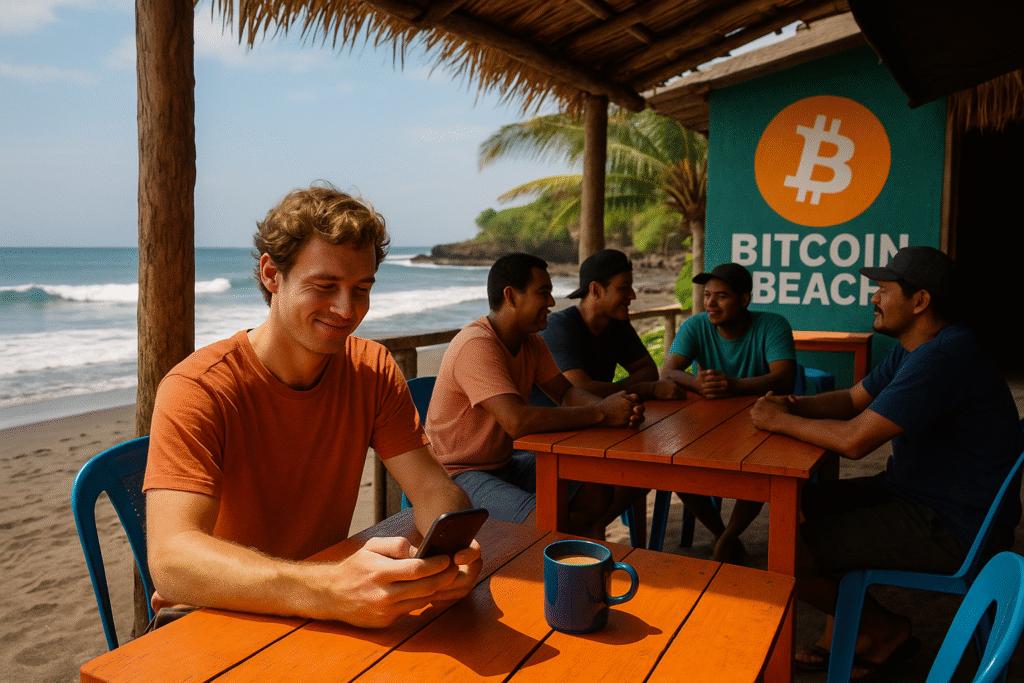
Picture this: You’re sitting at a beachside café in a small Central American surf town, ordering your morning coffee with Lightning Network payments while locals discuss their latest sat stacks between waves. Sounds like a Bitcoiner’s fever dream, right? Well, welcome to El Zonte, El Salvador—better known to the Bitcoin world as “Bitcoin Beach”—where this exact scenario plays out every single day.
While most of us were still explaining to friends and family why “fake internet money” might actually be revolutionary, the residents of this tiny coastal community were already living in the circular economy we all dream about. Long before President Nayib Bukele made global headlines by declaring Bitcoin legal tender across El Salvador, Bitcoin Beach was quietly proving that hyperbitcoinization isn’t just possible—it’s inevitable.
The Sleepy Surf Town That Started a Revolution
El Zonte sits on El Salvador’s Pacific coast, about an hour’s drive from the capital San Salvador. With a population of roughly 3,000 people, it’s the kind of place where everyone knows everyone, where the rhythm of life follows the tides, and where—until recently—most residents had never stepped foot inside a traditional bank.
This unassuming fishing and surfing village has always attracted a small but dedicated community of international surfers and expats drawn to its consistent waves and laid-back vibe. But it was the arrival of American expat Michael Peterson in 2009 that would eventually set the stage for one of the most significant Bitcoin adoption experiments in history.
For years, Peterson worked on various community development projects in El Zonte, focusing on education and economic empowerment. He understood the challenges facing the local community: limited access to traditional banking, high remittance fees for families receiving money from relatives abroad, and an economy largely dependent on cash transactions that offered little opportunity for savings or wealth building.
Little did anyone know that a chance encounter and an anonymous Bitcoin donation would transform this sleepy surf town into ground zero for the future of money.
The Anonymous Donation That Changed Everything
The Bitcoin Beach story begins with what might be the most consequential forgotten thumb drive in history. Sometime in early 2019, an anonymous donor with a fondness for El Zonte discovered a forgotten thumb drive loaded with Bitcoin that he had originally purchased when it was priced at around 5-10 cents.
Rather than simply cash out for personal gain, this mysterious benefactor reached out to Michael Peterson with an ambitious proposal: use the Bitcoin to build a circular economy in El Zonte that could demonstrate the transformative power of peer-to-peer electronic cash for the unbanked and underbanked.
That anonymous Bitcoiner from the beginning wanted to donate a large amount in Bitcoin and use it to build a Bitcoin economy to help people who are otherwise excluded from finance. It was the kind of real-world application that Satoshi Nakamoto himself might have envisioned when he wrote the Bitcoin whitepaper—using digital currency to bank the unbanked and create financial sovereignty for ordinary people.
Peterson, along with local partners including Jorge Valenzuela and other community leaders, accepted the challenge. They understood that this wasn’t just about introducing a new payment method; it was about creating an entirely new economic paradigm that could provide financial inclusion and empowerment to a community that had been largely ignored by traditional financial institutions.
Building the Orange-Pilled Paradise
What happened next was pure Bitcoin magic. Instead of top-down implementation, the Bitcoin Beach team took a grassroots approach that would make any sovereignty-focused Bitcoiner proud. They started small, identifying key businesses and community members who were willing to experiment with this new form of money.
The project launched with a simple but powerful premise: create a closed-loop economy where Bitcoin could be earned, spent, and saved without ever needing to touch the traditional financial system. Local businesses were onboarded to accept Bitcoin payments, while community members were taught how to use mobile wallets and introduced to concepts like private keys and self-custody.
Tech entrepreneur Chris Hunter saw an opportunity to deliver a faster and cheaper way to transact with bitcoin using the new Lightning Network, and developed a purpose-built Bitcoin wallet app specifically for El Zonte. This wasn’t some corporate fintech solution imposed from Silicon Valley—it was grassroots Bitcoin technology built by Bitcoiners, for Bitcoiners.
The Lightning Network integration was crucial to the project’s success. While on-chain Bitcoin transactions are perfect for larger payments and savings, the Lightning Network enabled the instant, low-fee microtransactions that make everyday commerce possible. Suddenly, buying a pupusa for lunch or paying for a haircut with sats became not just possible, but practical.
The Circular Economy in Action
By 2021, El Zonte had achieved something that seemed impossible just years earlier: a functioning Bitcoin circular economy. El Zonte residents are now using bitcoin to pay their electricity bills and buy lunch for their kids. The transformation was comprehensive, touching every aspect of daily life in the community.
Local businesses from restaurants and shops to service providers began accepting Bitcoin payments.
More importantly, they began keeping their earnings in Bitcoin rather than immediately converting to dollars—a key indicator of true adoption and confidence in the network.
Workers could receive their wages in Bitcoin, students could earn sats for good grades, and families could receive remittances from abroad without paying the crushing fees typically associated with traditional money transfer services.
The impact on remittances alone was revolutionary. Families who previously lost significant percentages of their income to Western Union fees could now receive money from relatives in the United States instantly and with minimal fees. For a community where remittances represent a major source of income, this wasn’t just a technological upgrade—it was economic liberation.
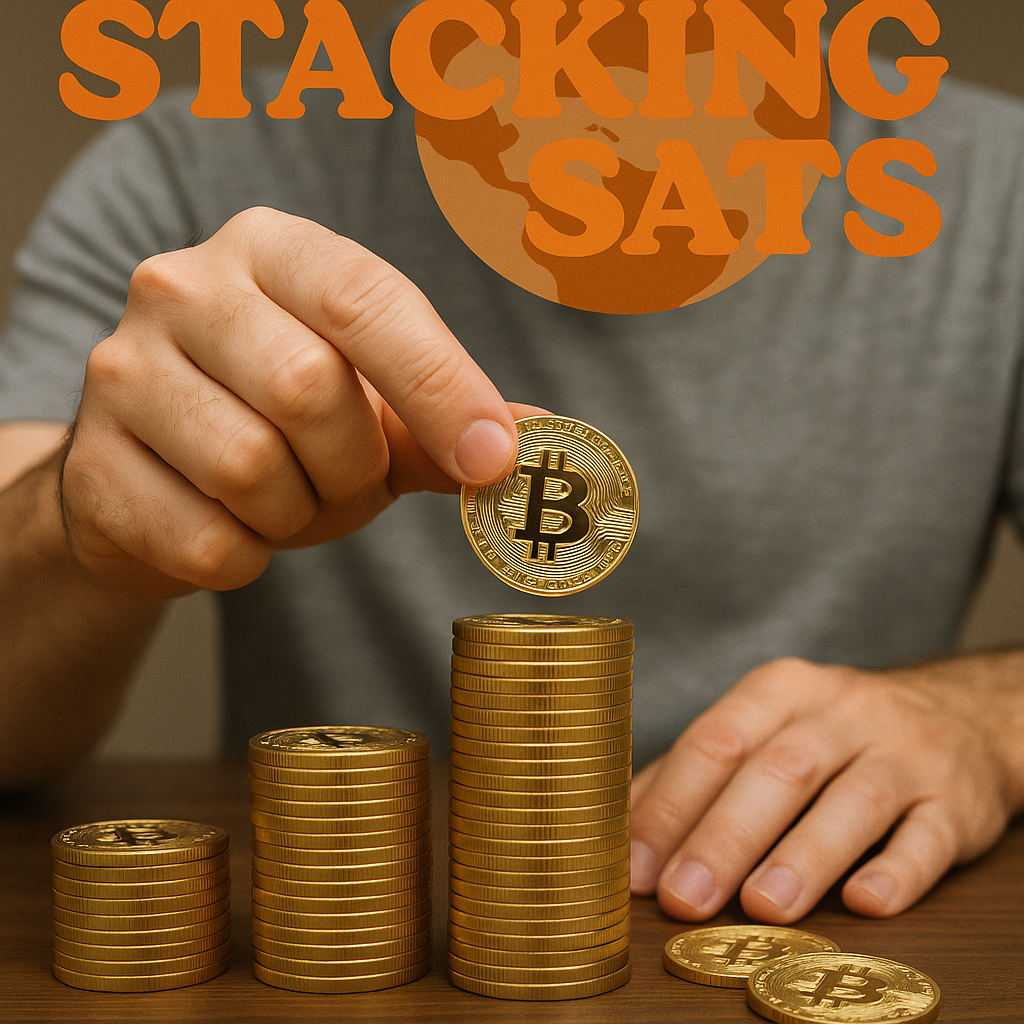
Stacking Sats and Building Sovereignty
What made Bitcoin Beach special wasn’t just the payments infrastructure—it was the education and empowerment component. The project prioritized Bitcoin education, teaching community members about concepts like inflation, monetary policy, and the importance of sound money. Residents weren’t just using Bitcoin; they were learning to think like Bitcoiners.
“Bitcoin has transformed the way we do business here. It’s faster, and we save on transaction fees.”
– Local Shop Owner
Shopkeeper Maria Aguirre watched with delight as the cryptocurrency — and her investment in it — recently soared to new all-time highs. Stories like Maria’s became common throughout El Zonte, where residents who had never had access to savings accounts or investment opportunities were suddenly able to preserve and grow their wealth through Bitcoin.
The psychological shift was perhaps even more significant than the technological one. For the first time, many residents had complete control over their money without relying on banks, governments, or other intermediaries. They had experienced true financial sovereignty, and there was no going back.
Michael Peterson: The Reluctant Bitcoin Hero
At the center of this transformation stands Michael Peterson, the American expat who became an unlikely hero in the Bitcoin space. Peterson, who describes himself as the Director of Bitcoin Beach, never set out to become a Bitcoin celebrity. His focus remained squarely on the community development aspects of the project rather than personal recognition.
Mike Peterson is the Director at Bitcoin Beach, a non-profit located in El Zonte / El Salvador that helped bootstrap the circular Bitcoin economy that eventually inspired the adoption of Bitcoin as legal tender in El Salvador. His approach to Bitcoin adoption was refreshingly grounded in practical utility rather than speculative hype.
Peterson’s strategy was to let the technology speak for itself. Rather than pushing Bitcoin adoption through marketing or incentives, he focused on solving real problems for real people. When families could save money on remittances, when small business owners could avoid bank fees, when workers could preserve their purchasing power—that’s when true adoption happened organically.
His work in El Zonte demonstrates what many in the Bitcoin community have long believed: Bitcoin adoption will ultimately succeed not because of price speculation or institutional investment, but because it provides genuine utility and empowerment to ordinary people around the world.
From Local Experiment to National Policy
The success of Bitcoin Beach didn’t go unnoticed. By early 2021, the experiment in El Zonte had caught the attention of President Nayib Bukele and his administration. What started as a small community project had become a proof-of-concept for national Bitcoin adoption.
The Central American nation became the first in the world to adopt the cryptocurrency as legal tender in September 2021, with El Zonte serving as both inspiration and testing ground for the policy. The Bitcoin Beach project had effectively provided a real-world case study that helped inform national policy decisions.
The relationship between Bitcoin Beach and the national Bitcoin law created an interesting dynamic. While some Bitcoiners worried about government involvement in Bitcoin adoption, the El Zonte community had already proven that grassroots, voluntary adoption was not only possible but more effective than top-down mandates.
The Ripple Effects: Orange-Pilling the World
The influence of Bitcoin Beach extends far beyond the borders of El Salvador. The project Bitcoin Beach is creating a sustainable Bitcoin Economic ecosystem on the coast of El Salvador, where the majority of people do not have access to bank accounts and the local businesses could benefit from Bitcoin adoption.
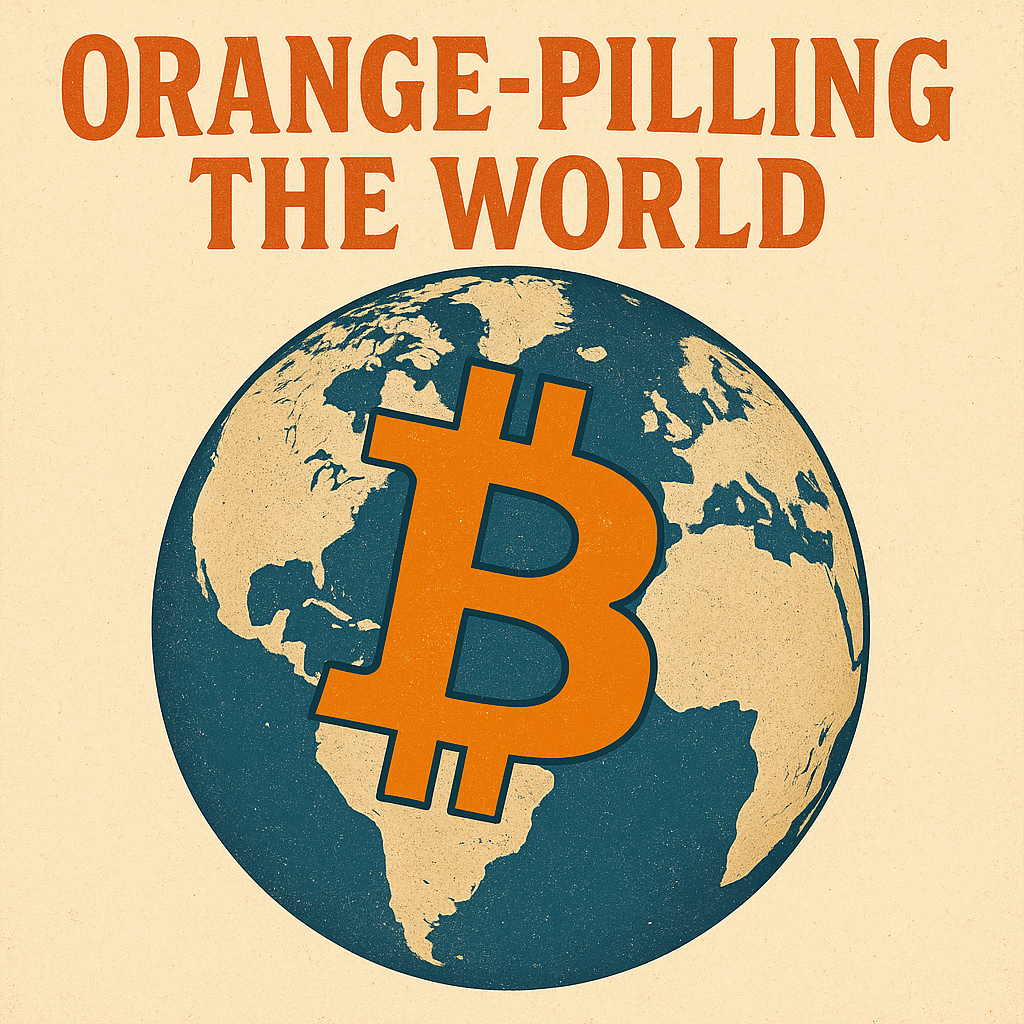
Bitcoin communities around the world have studied the El Zonte model, adapting its lessons for their own contexts. From similar projects in other Latin American countries to Bitcoin meetups in major cities, the grassroots approach pioneered in El Zonte has become a template for organic Bitcoin adoption.
The project has also influenced the broader Bitcoin development community. The emphasis on Lightning Network payments, mobile wallet design, and user education has informed product development decisions across the Bitcoin ecosystem. When developers build Bitcoin applications today, many consider the lessons learned from real-world usage in places like El Zonte.
Challenges and Growing Pains
Of course, the road to hyperbitcoinization hasn’t been entirely smooth. Bitcoin Beach has faced various challenges, from technical infrastructure limitations to the learning curve associated with new technology adoption. Not every resident immediately embraced Bitcoin, and the project required patience and persistent education efforts.
Between 2021 and 2024, property values rose to $80.61 per square meter, an increase of 134.8 percent since the passage of the Bitcoin Law in 2021. The success of Bitcoin Beach has also led to concerns about gentrification, as increased attention and investment have driven up local property values and living costs.
The influx of Bitcoin tourists and digital nomads has created economic opportunities but also challenges for the local community. Balancing the benefits of increased economic activity with the need to preserve the community’s character and ensure that longtime residents can afford to stay has become an ongoing consideration.
The Lightning Network Laboratory
One of the most significant technical contributions of Bitcoin Beach has been its role as a real-world testing ground for Lightning Network technology. While Lightning was theoretically sound, El Zonte provided one of the first large-scale deployments of the technology for everyday commerce.
The lessons learned from thousands of daily Lightning transactions in El Zonte have contributed to improvements in Lightning wallet design, channel management, and user experience. When Bitcoin developers optimize Lightning Network software today, they often reference usage patterns and feedback from communities like Bitcoin Beach.
This real-world testing has been invaluable for the broader Bitcoin ecosystem. Rather than relying solely on theoretical models or controlled testing environments, developers have been able to observe how Lightning performs under actual usage conditions with users of varying technical sophistication.
Building the Future, One Sat at a Time
Today, Bitcoin Beach continues to evolve and expand its impact. The project has inspired similar initiatives in other communities throughout El Salvador and beyond. The Bitcoin Beach Playbook, developed by Peterson and his team, provides a roadmap for other communities interested in implementing similar Bitcoin adoption projects.
The educational component remains central to the project’s mission. Regular workshops, community meetings, and educational programs ensure that new residents and business owners understand not just how to use Bitcoin, but why it matters. This focus on education rather than mere adoption helps create lasting change rather than superficial implementation.
The project has also become a destination for Bitcoin pilgrimage, attracting visitors from around the world who want to experience a functioning Bitcoin economy firsthand. These Bitcoin tourists contribute to the local economy while also carrying the lessons and inspiration back to their own communities.
The Global Impact of Local Action
What makes Bitcoin Beach truly special is how it demonstrates the power of local action to create global change. A small community of 3,000 people on the Pacific coast of El Salvador didn’t just adopt Bitcoin—they proved that Bitcoin adoption was possible, practical, and beneficial for ordinary people.
This grassroots demonstration of Bitcoin’s utility has influenced policy discussions, development priorities, and adoption strategies around the world. Every time someone argues that Bitcoin is too complex for mainstream adoption, or that developing countries can’t implement Bitcoin infrastructure, Bitcoin Beach provides a compelling counterexample.
The project embodies the core principles that attracted many of us to Bitcoin in the first place: decentralization, empowerment, financial sovereignty, and the belief that individuals should have control over their own money. In an era of increasing centralization and financial surveillance, El Zonte stands as a beacon of what’s possible when communities take control of their economic destiny.
Looking Toward the Future
As Bitcoin continues its journey toward global adoption, the lessons from Bitcoin Beach become increasingly relevant. The project demonstrates that successful Bitcoin adoption requires more than just technological infrastructure—it requires education, community engagement, and a focus on solving real problems for real people.
The success in El Zonte also highlights the importance of the Lightning Network for Bitcoin’s future as a medium of exchange. While Bitcoin’s base layer provides the security and finality necessary for savings and large transactions, Lightning enables the instant, low-fee payments that make Bitcoin practical for everyday commerce.
Perhaps most importantly, Bitcoin Beach proves that we don’t need to wait for institutional adoption or government approval to start building the Bitcoin economy. Communities around the world can begin implementing Bitcoin solutions today, creating the circular economies that will form the foundation of Bitcoin’s ultimate success.
Join the Revolution
The story of Bitcoin Beach is far from over. As Bitcoin continues to grow and evolve, communities like El Zonte will remain at the forefront of innovation and adoption. They’re not just using Bitcoin—they’re actively building the future of money.
Whether you’re a seasoned Bitcoiner or just beginning your journey down the rabbit hole, the lessons from Bitcoin Beach offer valuable insights into what Bitcoin adoption looks like in practice. It’s not about getting rich quick or beating traditional finance—it’s about empowering individuals and communities to take control of their economic destiny.
The revolution started in a small surf town on the Pacific coast of El Salvador, but it won’t end there. Every time someone chooses Bitcoin over traditional banking, every time a community implements Lightning payments, every time an individual gains financial sovereignty—the Bitcoin Beach revolution continues to spread.
Want to stay updated on Bitcoin adoption stories from around the world? Our newsletter brings you the latest developments from Bitcoin communities like El Zonte, along with insights from developers, entrepreneurs, and everyday Bitcoiners who are building the future of money. Subscribe today to join thousands of readers who are tracking Bitcoin’s journey from experimental technology to global monetary standard—one sat, one community, and one success story at a time.